
The most common brain fog causes are poor or broken sleep, low iron stores, an underactive thyroid, low vitamin B12, blood sugar swings, perimenopause, medication side effects and the tail of a viral illness. None of them can be confirmed from a list, so the useful job is collecting what a doctor needs to check each one.
Listen to this article, about 18 minutes. A synthetic voice reads the article and announces each section title as it begins; tables are read row by row and the questions at the end are left out.
Recorded 14 October 2026 from the article as published that day. Press a chapter to jump there; the highlighted line is what is playing. A play button sits beside every section heading, and once you scroll past this player a bar at the bottom of the screen keeps the controls in reach. Tap or click any sentence to hear the reading start from there.
On this page: the eight causes in one table, what the statin prescribing label actually records about memory, the ONS figures from 6,119 people with long COVID, and a two week log to take to a GP.
Think you already know this? Five questions, one minute.
Every answer is on this page. Answer from what you know now; the page fills in the rest.
-
1. How does the NHS say the symptoms of an underactive thyroid usually develop?
The NHS underactive thyroid symptoms page says they usually develop slowly and get worse over time, which is why people adapt without noticing. Read the section
-
2. On the simvastatin label, what is the median time for reported cognitive symptoms to resolve once the statin was stopped?
The FDA simvastatin label gives a median of 3 weeks and calls the reports rare and generally nonserious. It is a reason to talk to the prescriber, not to stop the tablet. Read the section
-
3. In the ONS survey of people with self reported long COVID in spring 2023, what share named difficulty concentrating?
The ONS bulletin of 10 July 2023 put it at 37%. The 60% figure was weakness or tiredness, the most common symptom. Read the section
-
4. How long does this page suggest keeping the log before an appointment?
Two weeks of five short lines a day is usually enough for a pattern to show, and it gives a doctor something specific to work with. Read the section
-
5. Which of these does the page say needs urgent attention rather than a symptom diary?
Brain fog is gradual and fluctuates. Sudden confusion, difficulty speaking, weakness on one side or an abrupt severe headache are different problems, and the page on brain fog and blurred vision sets out the related emergency signs. Read the section
Brain fog is not a diagnosis. It is a description, the way tiredness is, which is why the honest answer to what causes it starts with a list rather than a verdict. Where the viral illness was a winter one, we looked separately at brain fog after flu and how thin the influenza evidence really is. People with ADHD use the phrase too, although what the ADHD criteria actually list is narrower than the fog they describe. Alcohol sits on the list as well, and it behaves differently depending on whether the fog is from one heavy night or from weeks since the last drink, which is why alcohol brain fog gets its own worked timeline.
That list is short enough to take through an appointment in order, which is the point of this article. Guessing is slow. Arriving with a clear timeline is fast.
First, what brain fog actually describes
People use the phrase for a cluster of things that feel related: losing the thread of a sentence, rereading the same paragraph, walking into a room and forgetting why, struggling to hold two things in mind at once. If you want the longer version, I have written separately about what brain fog actually is. What that cluster feels like from the inside, and why it worsens as the day goes on, is the subject of our piece on brain fog symptoms.
The common thread is working memory. It is the mental scratchpad you use to hold information while you do something with it, and it is the first thing to degrade when something else is wrong. That is why brain fog is such a general symptom. Almost anything that taxes the body shows up there. Anxiety is one of the loads that has actually been measured, and we put a number on how much anxiety dents working memory.
The eight causes worth checking first
| Cause | What points to it | How it is usually confirmed |
|---|---|---|
| Poor or broken sleep | Worse after bad nights, better after good ones, worst mid afternoon | A two week sleep log |
| Low iron or ferritin | Tiredness, breathlessness on stairs, cold hands, heavy periods | Blood test including ferritin, not just haemoglobin |
| Underactive thyroid | Cold, dry skin, weight gain, slowed thinking, constipation | Thyroid function blood test |
| Low vitamin B12 | Tingling in hands or feet, sore tongue, fog that came on gradually | Blood test, more likely if vegan or on metformin |
| Blood sugar swings | Fog two hours after eating, better after protein | Food and symptom diary, HbA1c if suspected |
| Perimenopause | Age 40 plus, cycle changes, fog arrives with other new symptoms | Pattern over time rather than a single test |
| Medication side effect | Fog started within weeks of a new prescription | Review the timeline with your prescriber |
| After a viral illness | Clear before, foggy since, often with fatigue | History, once other causes are excluded |
Two of those deserve their own articles because they are so common. brain fog from poor sleep is the one almost everyone has experienced. brain fog in menopause is the one most often mistaken for something else entirely. The NHS menopause symptoms page files problems with memory or concentration under a heading that uses the words brain fog outright.
The four that account for most cases
Sleep. Not hours in bed, hours actually asleep, and how broken they were. Broken sleep can leave someone foggier than their hours in bed would suggest, which is why parents of small children and people with untreated sleep apnoea describe such similar fog despite very different lives. That overlap is the whole subject of postpartum brain fog after a new baby, where research found sleep timing and consistency mattered more than total hours. The NHS page on obstructive sleep apnoea lists loud snoring, waking up a lot, feeling very tired during the day and finding it hard to concentrate, so if you snore heavily and wake unrefreshed no matter how long you were down, say so specifically at an appointment. Caffeine can work against sleep without you noticing, and going without your usual amount brings its own fog, which is why we set out when too much or too little caffeine is behind foggy thinking. If you would not fall asleep given the chance and still cannot think, that is mental fatigue rather than sleepiness, a distinction our piece on what mentally tired means draws from the sleep research.
Iron. The one most often missed, because a standard blood count can look normal while iron stores are nearly empty. Ferritin measures the stores. You can be low on stores, not yet anaemic, and feel it clearly in concentration and stamina. Anyone with heavy periods, a vegetarian diet or a history of low iron should ask for ferritin by name rather than accept a general all clear, and it is worth knowing how strong the evidence linking low iron to brain fog really is before deciding what it means.
Thyroid. An underactive thyroid slows everything down, thinking included, and does it so gradually that people adapt without noticing. The giveaway is the company it keeps. The NHS list of underactive thyroid symptoms puts difficulty concentrating or thinking clearly beside feeling cold more than usual, constipation, dry skin and weight gain, and notes that the symptoms usually develop slowly and get worse over time. It is one blood test, and worth having done once rather than wondered about for a year. For what people treated for an underactive thyroid say the fog is actually like, and why it can outlast a normal result, see what 5,170 patients reported about thyroid brain fog.
Blood sugar. If fog reliably arrives ninety minutes to two hours after eating and lifts once you eat again, look at the meal rather than at your brain. A breakfast that is mostly refined carbohydrate produces a rise and then a fall, and the fall is where the fog lives. Adding protein to the same meal usually settles it within days, which makes this the fastest of the eight to test. Cutting carbohydrate out altogether raises the same question from the other direction, and what the keto brain fog trials actually measured sets out what happens to thinking in the first weeks. The sleep lab and glucose monitor studies on brain fog after eating and the post meal slump make the picture less tidy than that, and doctors only confirm a true sugar crash with a low reading taken during the symptoms. Longer term food claims are shakier still, as the trial evidence on foods for brain fog shows.

The ones people miss
Iron is the classic. Standard blood tests often report haemoglobin as normal while ferritin, which measures iron stores rather than circulating iron, sits at the bottom of the range. You can be low on stores and not yet anaemic, and feel it clearly. If you have heavy periods and persistent fog, ask specifically about ferritin rather than accepting a general all clear. One of the reasons stores run low is coeliac disease, which matters here because the testing for it has to happen before any change of diet, as we set out in why celiac testing comes before cutting gluten. B12 is the other deficiency that hides behind a normal looking result, and the NHS symptoms page for B12 or folate deficiency lists problems with memory, understanding and judgment among its effects, although there the argument is about the test itself, which is why guidelines disagree about what a borderline B12 result means. Magnesium is often suggested alongside iron, but the trials behind it are small and none recruited people because they had brain fog, as our review of the magnesium for brain fog trials sets out.
Dehydration is the other one, and it is unglamorous enough that people dismiss it. Mild dehydration does measurably affect mood and how hard a task feels, although the trials behind that finding had to push people well past ordinary thirst to produce it, which is the part we put numbers on in how much fluid loss it actually takes to cause brain fog. It will not be the whole answer, but it is free to rule out and it takes a day.
Medication timing catches people out because the connection is not obvious after the fact. Antihistamines, some blood pressure medicines, sleeping tablets and certain antidepressants can all blunt thinking. If your fog started within a few weeks of a new prescription, that timeline is worth raising. Hay fever season is a common version of this, and our page on allergies and brain fog, and whether it is the pollen or the pills sets out what the studies measured and what the antihistamine leaflets say about drowsiness. Timelines matter in the other direction too, because each documented trigger has its own typical course, set out in how long brain fog can last, trigger by trigger.
What should you write down before an appointment?
- Log for two weeks. Note sleep hours, what you ate, how the fog scored out of ten, and when it was worst. Patterns show up in writing that are invisible in memory.
- Look at the clock. Note whether the fog is worst at one time of day or steady all day, because that is one of the first things a doctor asks.
- Look at the calendar. Note whether it follows a monthly cycle, or whether it began around a specific date, such as an illness or a new prescription.
- Try the free things first. A week of regular sleep, enough water and some protein at breakfast costs nothing, and the log will show whether anything moved.
- Then book the appointment and take the log with you. It turns a vague complaint into a specific question, and the doctor decides which tests fit.
The log is the part people skip and it is the part that helps most. Two weeks of notes gives a doctor a pattern to work with instead of a feeling.
Two week fog log
The five lines this page suggests, one entry a day, so you have a timeline to show a GP. It does not score, interpret or diagnose anything.
Entries stay on this device and are not sent anywhere. Only a clinician can assess what is behind persistent brain fog.
What a useful log actually looks like
It does not need to be elaborate. Five lines a day is plenty, and elaborate systems get abandoned by day four.
- Hours asleep, and how many times you woke
- What you ate for breakfast, in three words
- Fog score out of ten, taken at a fixed time such as three in the afternoon
- Worst moment of the day, and roughly when
- Anything unusual: alcohol, a late coffee, a new tablet, a bad night
Two weeks of that is usually enough for a pattern to show, and it is often one that was invisible day to day and mildly annoying in hindsight.
Medications that commonly cause it
This is the cause most often missed, because the connection is invisible after the fact. Nobody remembers that the fog started three weeks after a prescription changed, and by the time it is bad enough to investigate, the new tablet has become part of the furniture.
| Type | Examples of what it is used for | What to look for |
|---|---|---|
| Antihistamines | Allergies, hay fever, some sleep aids | Older sedating types especially, and they are often bought over the counter |
| Beta blockers | Blood pressure, heart rhythm, anxiety | Tiredness and slowed thinking together |
| Some antidepressants | Mood, anxiety, pain | Varies considerably by drug and by person |
| Benzodiazepines and sleeping tablets | Anxiety, insomnia | Next day grogginess that does not clear |
| Anticholinergics | Bladder, gut, some Parkinson medication | A recognised effect on thinking, particularly with age |
| Statins | Cholesterol | Reported by some people, disputed and worth raising |
| Opioid painkillers | Pain | Sedation and slowed processing |
The statin row is the one with an official paper trail. The US prescribing information, here the current simvastatin label from the FDA, records rare reports of cognitive impairment such as memory loss, forgetfulness and confusion, describes it as generally nonserious and reversible when the statin was stopped, and gives a median of 3 weeks for symptoms to resolve. Rare is the important word. It is a reason to mention the timing to whoever prescribed it, not a reason to stop the tablet.
Two practical points. Over the counter medicines count, and people routinely omit them when asked what they take, particularly antihistamines and sleep aids. And the answer is never to stop something on your own, because several of these are dangerous to stop abruptly.
Write down everything you take, including anything bought without a prescription, with the date you started it. Take that list to the appointment. A prescriber can look at it in thirty seconds and often spot something you would never have connected.
Getting taken seriously at the appointment
Brain fog has a reputation for being dismissed, and some of that is real. A good deal of it can be avoided by changing how the problem is presented, which is unfair and also true.
The difficulty is that brain fog is not a diagnosis, so saying you have it gives a doctor nothing to work with. What gives them something is specifics: when it happens, what makes it worse, what has changed, and what it is stopping you doing. The word you open with steers the whole conversation, which our piece on the fuzzy head feeling shows with the descriptors people choose and what each one triggers.
- Lead with the impact rather than the sensation. Struggling to follow meetings at work is more actionable than feeling foggy.
- Give a start date, or say clearly that it was gradual, because those point in different directions.
- Bring the two week log. It converts a vague complaint into a pattern and it visibly changes the conversation.
- Bring the medication list, including anything over the counter.
- Ask directly what could cause this and what would rule each one out. That question is harder to wave away than a general request for help.
- Ask what was tested and what was not, and get the actual numbers rather than being told everything was normal.
That last point matters more than it looks. Normal covers a wide range, and a result at the very bottom of a reference range is technically normal while still being worth acting on for some people.

What to take to the appointment
These make a GP appointment about brain fog more useful. Tick them off as you gather them.
This list helps you describe what is happening. It is not a test and it does not point to a cause.
Conditions where brain fog is a recognised feature
Not a diagnostic list, and worth knowing because if you have one of these, the fog may already have an explanation.
- Thyroid disorders. Both under and overactive, and the underactive version is the classic slow onset case.
- Anaemia and low iron stores. Common, easily missed, and treatable.
- Diabetes. Both high and low blood sugar affect concentration, and swings do it more than a steady level.
- Sleep apnoea. Frequently undiagnosed for years, and the fog is often the presenting complaint rather than the snoring.
- Depression and anxiety. Cognitive symptoms are part of both, not a separate problem alongside them.
- Post viral syndromes. A recognised pattern following infection, including but not limited to covid.
- Autoimmune conditions. Several list cognitive symptoms among their features.
- Chronic pain. Pain occupies attention continuously, which produces exactly this.
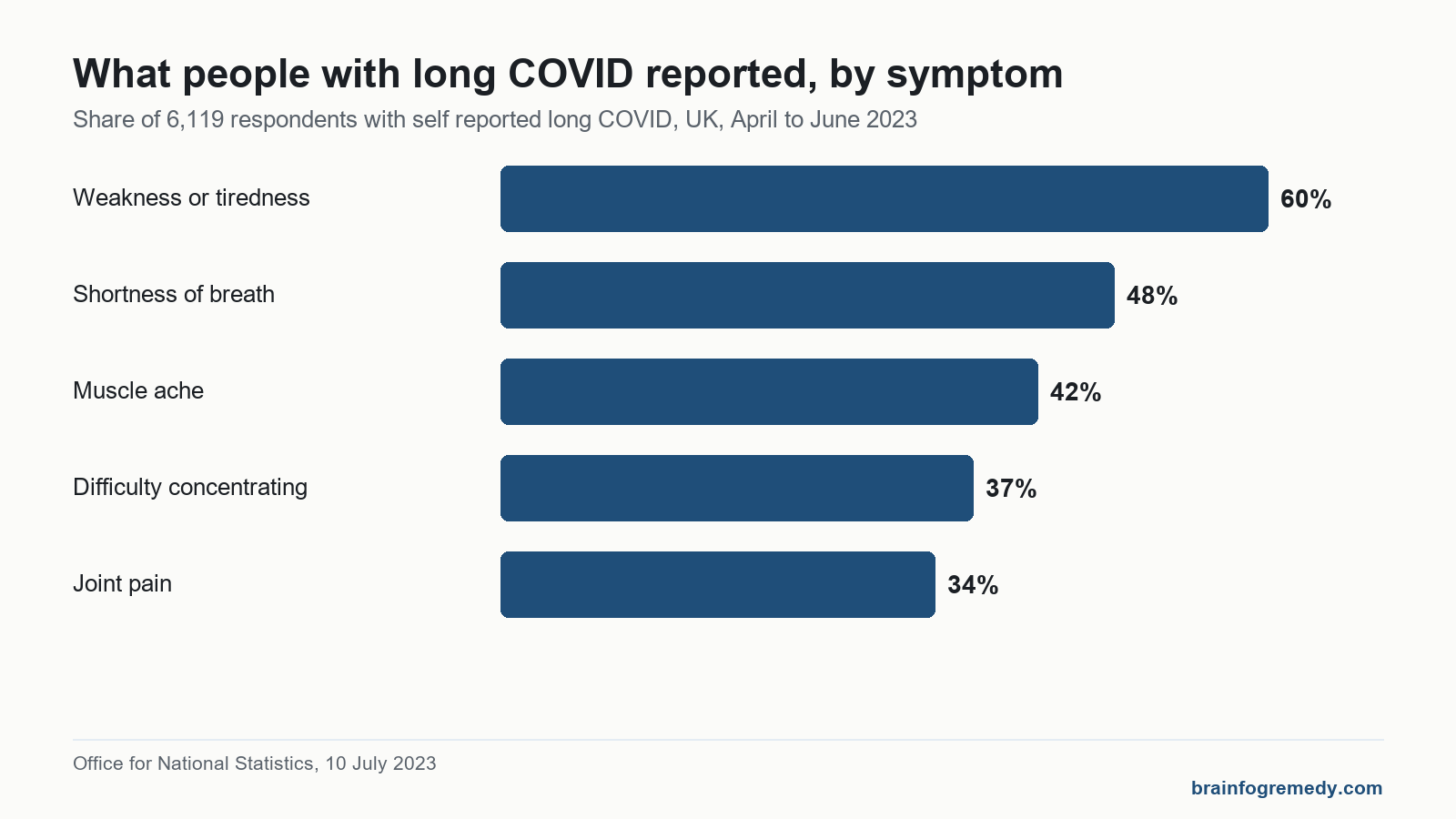
Post viral fog is the best documented of these. The NICE guideline on the long term effects of COVID-19 lists cognitive symptoms among the neurological ones, and in the ONS survey of 6,119 people with self reported long COVID, run between 10 April and 12 June 2023, 37% named difficulty concentrating as part of their experience, behind weakness or tiredness at 60%, shortness of breath at 48% and muscle ache at 42%. Those figures describe the people who answered, not everyone who has had COVID, and the ONS says they cannot be generalised to the whole population.
If you recognise yourself in one of those, that is the conversation to have rather than treating the fog as a separate mystery. fog that comes with exhaustion covers the combination that most often points somewhere specific. Where an autoimmune condition is already in the picture, the research is patchier than the headlines suggest, which is the subject of our look at what the studies on rheumatoid arthritis and cognition actually measured.
When it is not just brain fog
Brain fog is gradual and it fluctuates. Some things are not. Sudden confusion, difficulty speaking, weakness on one side, or a severe headache that arrived abruptly are all different problems and need urgent attention rather than a symptom diary. The same applies when fog comes with a change in sight, and the brain fog and blurred vision signs the NHS treats as an emergency are set out in their own piece. In an older adult that sudden confusion is very often put down to infection without much scrutiny, which is why the evidence behind UTI brain fog and confusion is worth reading before accepting the explanation.
Persistent fog with unexplained weight loss, night sweats, or numbness that is spreading also needs a doctor rather than a self experiment.
What to do this week
Start the log today, because it takes two weeks and everything else waits on it. Then read how to clear brain fog, which covers what to actually change once you have a suspect. If the fog comes with exhaustion rather than just muddle, fatigue that comes with it is the more relevant read.
Frequently asked questions
Is brain fog a real medical condition?
Not as a diagnosis in its own right. No doctor will write brain fog on a chart as a condition. It is a description of a symptom, in the same way that tiredness is. That does not mean it is imaginary. It means the useful question is what is causing it.
What blood tests are worth asking for?
The common starting set is a full blood count, ferritin, vitamin B12, vitamin D, thyroid function and blood glucose or HbA1c. Those cover the causes that are both common and easily missed. Your doctor decides what is appropriate for you.
How long does brain fog usually last?
It depends entirely on the cause. Fog from one bad night clears within a day of normal sleep. Fog from low ferritin or an underactive thyroid does not clear until the underlying problem is treated, which can take months.
Can anxiety cause brain fog?
Yes, and it is one of the most commonly missed causes. Sustained anxiety occupies working memory, which is the exact mental resource that brain fog feels like a shortage of. People often look for a physical cause first and find nothing.
When should I see a doctor about brain fog?
If it has lasted more than a few weeks, is getting worse, comes with unexplained weight change, or arrives alongside numbness, weakness or vision changes. Sudden confusion is different from brain fog and is urgent.
Can dehydration alone cause brain fog?
It contributes more than people expect and it is rarely the whole answer. In the controlled trials, mood and perceived effort shifted at around 1.4 percent of body mass lost, which took a heat walk and a diuretic to reach, so it is worth ruling out because it costs nothing and takes a day. If a week of drinking properly changes nothing, you have removed a variable cheaply.
Finished the page? The same five questions from the top, to see what stuck.
This article is general information, not medical advice, and is not a substitute for care from a qualified healthcare professional. Speak to your doctor about your own situation.
Leave a Reply